Nouvelles diverses | Page 103
Normes d'encadrement Nouvelles diverses
Le SHARE s’agrandit
Ivan Tchotourian 23 août 2016
The University of St. Michael’s College a rejoint le rséseau SHARE il y a peu : « Institutional investors push for environmental, social changes in companies through SHARE » (Benefits Canada, 12 août 2016). Cet article est l’occasion de revenir sur quelques statistiques et tendances que je vous livre ci-dessous :
More than 30 institutional investors across Canada, with a combined $14 billion in assets under management, participate in SHARE, including the United Church of Canada’s pension plan. (…) Each year, SHARE speaks with 50 to 100 companies — often in the mining, oil and gas, and financial services industries — about health and safety, climate change, water use and Aboriginal relations issues.
À la prochaine…
Ivan Tchotourian
Gouvernance Nouvelles diverses
P-DG : cela en vaut-il la peine ?
Ivan Tchotourian 20 août 2016
Bonsoir à toutes et à tous, voici un billet amusant de Julien Brault sur Les affaires.com : « Voulez-vous vraiment devenir pdg? ». Un texte bien loin de l’image traditionnellement véhiculée des P-DG star aux revenus extraordinaire…
Car la définition de tâches d’un pdg de start-up change de semaine en semaine, au fil de sa croissance. Ça implique donc d’avoir une bonne capacité à prendre des décisions pas trop éclairées (lorsqu’on n’a pas le temps de demander à quelqu’un qui est passé par là), beaucoup d’humilité et une capacité d’apprendre très rapidement.
À la prochaine…
Ivan Tchotourian
autres publications Nouvelles diverses
Publication du FRC sur les liens entre long-terme et culture
Ivan Tchotourian 18 août 2016
Le FRC vient de publier un intéressant rapport intitulé : « Corporate Culture and the Role of Boards: Report of Observations » (juillet 2016).
Quels sont les enseignements ?
- Recognise the value of culture: A healthy corporate culture is a valuable asset, a source of competitive advantage and vital to the creation and protection of long-term value. It is the board’s role to determine the purpose of the company and ensure that the company’s values, strategy and business model are aligned to it. Directors should not wait for a crisis before they focus on company culture.
Demonstrate Leadership: Leaders, in particular the chief executive, must embody the desired culture, embedding this at all levels and in every aspect of the business. Boards have a responsibility to act where leaders do not deliver.
- Be Open and Accountable: Openness and accountability matter at every level. Good governance means a focus on how this takes place throughout the company and those who act on its behalf. It should be demonstrated in the way the company conducts business and engages with and reports to stakeholders. This involves respecting a wide range of stakeholder interests.
- Embed and Integrate: The values of the company need to inform the behaviours which are expected of all employees and suppliers. Human resources, internal audit, ethics, compliance, and risk functions should be empowered and resourced to embed values and assess culture effectively. Their voice in the boardroom should be strengthened.
- Assess, Measure and Engage: Indicators and measures used should be aligned to desired outcomes and material to the business. The board has a responsibility to understand behaviour throughout the company and to challenge where they find misalignment with values or need better information. Boards should devote sufficient resource to evaluating culture and consider how they report on it.
Align Values and Incentives: The performance management and reward system should support and encourage behaviours consistent with the company’s purpose, values, strategy and business model. The board is responsible for explaining this alignment clearly to shareholders, employees and other stakeholders.
Exercise Stewardship: Effective stewardship should include engagement about culture and encourage better reporting. Investors should challenge themselves about the behaviours they are encouraging in companies and to reflect on their own culture.
Voici le résumé :
Today the Financial Reporting Council (FRC) publishes the results of a study, exploring the relationship between corporate culture and long-term business success in the UK. Stakeholders and society in general have a vested interest in healthy corporate values, attitudes and behaviours that lead to sustainable growth and long term economic success.
À la prochaine…
Ivan Tchotourian
autres publications Nouvelles diverses Structures juridiques
Le non-financier est important pour les institutions financières
Ivan Tchotourian 16 août 2016
Excellent document produit par McKinsey & Company : « Nonfinancial risk: A growing challenge for the bank » (juillet 2016). Ce document rappelle que l’extra-financier est devenu un facteur à gérer par les institutions financières…
Yet the direct financial consequences of non Financial risk (NFR) are not the only concern. The reputational damage wrought can hit a bank hard at a time when customers, shareholders, and public stakeholders are questioning banks’ business models. And there are also the personal consequences for senior managers, whom regulators increasingly hold accountable for misconduct or failure to comply with laws and regulations. All of this, and the prospect of still tighter regulation, puts considerable pressure on banks to manage NFR better.
(…) Against this backdrop, many institutions seek a more integrated NFR-management approach in order to reduce the risk of further failures, meet stakeholders’ requirements and expectations, and limit costs. This article describes the three key components of such an integrated approach: an enhanced governance framework, a set of enablers, and changes in the front office’s approach and mind-set. It is based on our work with many financial institutions globally and an informal survey of 15 global and regional banks. Some of the structures and ideas we outline here are familiar to banks from their work on financial risk; many are newly conceived for the management of nonfinancial risk. Taken together, a full implementation of these concepts represents a paradigm shift in the NFR-management practices of many banks today.
À la prochaine…
Ivan Tchotourian
autres publications Nouvelles diverses
Cartographie des risques 2016 : une photo de l’AMF France
Ivan Tchotourian 16 août 2016
Dans son Risques et tendances n° 17 de juillet 2016, l’AMF France offre une belle cartographie des risques auxquels font face les entreprises et les marchés.
L’AMF a publié sa cartographie 2016 qui constitue un panorama de l’évolution sur un an des risques liés à l’actualité économique, financière et réglementaire. Elle analyse le financement de l’économie, les marchés ainsi que l’épargne des ménages et la gestion collective. Pour sa dixième édition, sa publication intervient quelques jours seulement après le référendum ayant conclu à la sortie du Royaume-Uni de l’Union Européenne qui constitue une décision sans précédent et ouvre une période de fortes incertitudes.
À la prochaine…
Ivan Tchotourian
autres publications Nouvelles diverses
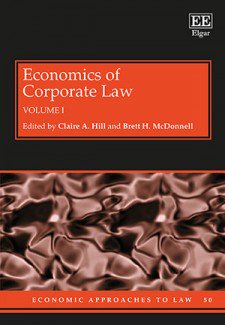
Nouvel ouvrage : « Economics of corporate law »
Ivan Tchotourian 4 août 2016
Bonjour à toutes et à tous, je vous signale la parution de ce nouvel ouvrage liant droit des sociétés par actions et analyse économique : « Economics of Corporate Law – Economic Approaches to Law series » (Edward Elgar Publishing, 2016).
Scholarly analysis of corporate law in the United States has come to be dominated by an economic approach. Professor Hill and Professor McDonnell here draw together seminal articles which represent major milestones along the road that economics has traveled in coming to play this central role in corporate law scholarship. The focus is on the analysis of corporate law, drawing mainly upon legal scholarship and particularly on US scholarship, which is the originator of the application of modern economic analysis to corporate law and has had much influence in other countries.
À la prochaine…
Ivan Tchotourian
autres publications Gouvernance normes de droit Nouvelles diverses
Rapport 2016 de PWC sur le crime économique
Ivan Tchotourian 3 août 2016
Belle étude annuelle de Pwc consacrée à la criminalité économique : « Global Economic Crime Survey 2016 – Adjusting the Lens on Economic Crime: Preparation brings opportunity back into focus ».
Today more than ever before, a passive approach to detecting and preventing economic crime is a recipe for disaster. To underscore this fact, our survey uncovered a widespread lack of confidence in local law enforcement – a phenomenon that is not limited to regions or level of economic development. The message is clear: the burden of preventing, protecting and responding to economic crime rests firmly with organisations themselves. Our survey this year focuses on three key areas – Cybercrime, Ethics and compliance programmes and Anti-Money Laundering – and explores certain common themes, including managing the risks associated with the pervasion of technology; what it means to conduct business responsibly across a widening business landscape; and integrating ethical conduct into decision-making.
In addition to highlighting specific areas of economic crime worth focusing on, we emphasise the things you can do better to tackle them – implementing more sophisticated and effective measures that can not only reduce these risks, but also bring the benefits of a more threat-aware business, confident of its defences in a changing world.
À la prochaine…
Ivan Tchotourian