Gouvernance | Page 135
autres publications engagement et activisme actionnarial
Les fonds activistes montent en puissance en Europe
Ivan Tchotourian 21 mai 2016
Le quotidien L’Agefi (ici) nous apprend qu’une étude de Conatus Finance dévoile les grandes tendances de l’activisme des fonds d’investissement européens.
Les fonds d’investissement continuent d’affirmer leur pouvoir d’influence sur les directions des entreprises dont ils sont actionnaires, y compris en Europe, selon une étude réalisée par Conatus Finance. « Le marché de l’activisme est toujours dominé par les gros fonds américains mais deux nouvelles tendances apparaissent », selon l’étude intitulée « Actionnaires actifs: un modèle d’activisme long terme adapté au marché européen ». Ces deux tendances sont résumées ainsi: un renforcement de leur action en Europe et « un focus sur le long terme ».
(…)
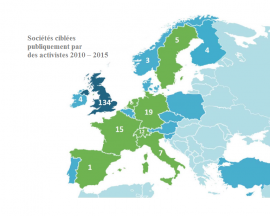
La majorité des fonds européens se concentrent d’avantage sur le long terme que les Etats-Unis mais la plupart des gros fonds activistes de long terme restent américains. En Europe, les sociétés les plus ciblées publiquement par les activistes sont très largement anglaises (134), suivies par les allemandes (19), les françaises (15) et les suisses (12).
À la prochaine…
Ivan Tchotourian
normes de droit normes de marché rémunération
Retour sur un échec
Ivan Tchotourian 21 mai 2016
Un article du Financial Times (“Why it is time to curb the madness of executive pay”, 9 mai 2016) de Patrick Jenkins revient sur les contestations entourant la rémunération des hauts-dirigeants.
Earlier last week, the FT revealed that Norway’s oil fund would start making an example of companies that overpaid their bosses. In the UK, the Investment Association has asked Nigel Wilson, chief executive of Legal & General, to lead a task force on a similar issue. On Sunday, in an online debate of the FT City Network — a panel of top-rank financiers — Mr Wilson complained that the current system of executive pay was “very obviously not fit for purpose”. Participants said this was bad for shareholders, but also morally bad for society given the widening gap between executive pay and average wages. It is about time the topic gained momentum. In the US, average pay for a top chief executive is more than 300 times median salaries, according to the Economic Policy Institute. In 1965, it was just 20 times. In the UK, that multiple is now 183 times, according to the High Pay Centre.
À la prochaine…
Ivan Tchotourian
normes de droit rémunération
Rémunération des patrons : proposition de durcissement en France
Ivan Tchotourian 19 mai 2016
Bonjour à toutes et à tous, voici une information de dernière minute !
Un amendement a été déposé ce mercredi 19 mai en commission des Affaires sociales à l’Assemblée nationale. Il vise à obliger les conseils d’administration à respecter les décisions votées par les assemblées des actionnaires. Cette proposition fait suite à l’affaire Renault…
À la prochaine…
Ivan Tchotourian
autres publications mission et composition du conseil d'administration Normes d'encadrement
Banque d’Angleterre : supervisory statement pour le CA
Ivan Tchotourian 19 mai 2016
L’Autorité prudentielle de la Banque d’Angleterre vient de publier un Supervisory Statement intitulé « Corporate governance: Board responsibilities » (SS5/16, mars 2016).
The Prudential Regulation Authority has published a policy statement and accompanying supervisory statement concerning the responsibilities of boards.
The purpose of this supervisory statement is to identify, for the boards1 of firms regulated by the Prudential Regulation Authority (PRA), those aspects of governance to which the PRA attaches particular importance and to which the PRA may devote particular attention in the course of its supervision. It is not intended to provide a comprehensive guide for boards of what constitutes good or effective governance. There are more general guidelines for that purpose, for example the UK Corporate Governance Code, published by the Financial Reporting Council.
À la prochaine…
Ivan Tchotourian
Gouvernance objectifs de l'entreprise
Les dividendes à tout prix : un risque
Ivan Tchotourian 18 mai 2016
Bonjour à toutes et à tous, le Financial Times apporte un regard critique sur les politiques de distribution des dividendes des entreprises : “Alarm grows as investors get bulk of listed groups’ profits” (9 mai 2016).
The world’s listed companies have paid out more than half their profits to shareholders in the form of dividends over the past year, an unusual situation that tends to occur only in periods of widespread economic weakness. “The implication is companies have kept paying out dividends even as earnings have fallen away, and the risk is companies are paying out dividends that are not sufficiently covered by their profits,” said Robert Buckland, global equity strategist for Citi Research…. Directors of public companies must balance demands from shareholders to receive an income from their ownership of a company against the need to reinvest profits in the cause of expansion and future growth.
À la prochaine…
Ivan Tchotourian
mission et composition du conseil d'administration Nouvelles diverses
Mauvaise conduite du P-DG : quelle réponse du CA ?
Ivan Tchotourian 18 mai 2016
« How should the board respond when a ceo’s bad behavior makes the news? », c’est sous ce titre que David Larcker et Brian Tayan propos une analyse sur le « comment » un CA réagit aux mauvaises nouvelles induites par la mauvaise conduite d’un P-DG
Corporations engage in a variety of responses to allegations of CEO misconduct. The most common is a press release or formal statement on the matter. This occurred 84 percent of the time. In 71 percent of cases, a spokesperson provided direct commentary to the press. Board members were much less likely to speak to the media, making direct comments only 37 percent of the time. In over half of cases (55 percent), the board of directors was known to initiate an independent review or investigation. The board is most likely to announce an independent review in cases of potential financial misconduct. However, the willingness of an individual director to discuss the matter directly with the press does not appear to be associated with the type of behavior involved or the “severity” of the CEO’s actions”.
À la prochaine…
Ivan Tchotourian
autres publications Gouvernance
Volkswagen : quelle leçon pour la gouvernance ?
Ivan Tchotourian 17 mai 2016
Le professeur John Armour offre une analyse synthétique des liens entre l’affaire Volkswagen et la gouvernance d’entreprise dans un billet de blog paru sur le site de l’Université d’Oxford : « Volkswagen’s Emissions Scandal: Lessons for Corporate Governance? (Part 1) ».
At this point, it remains unclear precisely how and why VW came to do this. US law firm Jones Day have been retained by VW to conduct an internal investigation, the results of which are due in the fourth quarter of 2016. VW’s official line is that this was the result of the actions of a few engineers and programmers. Let’s call this the ‘rogue technicians’ theory. However, with such a large number of vehicles, over a period of about seven years, it seems—as was argued in a recent post by J.S. Nelson—more plausible that senior management might have been aware of the scheme (or warning signs of it) at some point prior to its revelation. Let’s call this the ‘management inaction’ theory.
J’ai hâte de lire la partie 2 !
À la prochaine…
Ivan Tchotourian