Base documentaire Gouvernance loi et réglementation normes de droit
From greenwashing to green trust : une tribune
Ivan Tchotourian 1 août 2024
Merci à Sonia Trottier de L’Initiative canadienne de droit climatique pour son analyse : « From greenwashing to green trust: How Bill C-59 strengthens regulations and protects Canadians » (juin 2024).
Extrait :
In November 2023, the government introduced Bill C-59, the Act to implement the Fall Economic Statement, which includes some considerations that aim to improve greenwashing regulations through the Competition Act. While welcomed by many, some argue that the bill is insufficient to effectively tackle greenwashing and protect consumers in Canada. Others have concerns that the proposed changes will negatively impact the economy.
Pamela Wallin, Senator and Chair of the Senate Banking Committee, asked the Competition Bureau to respond to the concerns of Pathways Alliance, Canada’s largest fossil fuel producers consortium that has a net-zero target by 2050. Pathways Alliance believes that the new greenwashing provisions to be added to the Competition Act would prevent companies from making statements about their environmental performance or plans.
Bill C-59 was passed without amendments on June 19, 2024 and received Royal Assent on June 20, 2024. Pathways Alliance followed with a notice on its website, removing all content from its website, social media, and public communications. It also stated that the consortium remained committed to its work and reducing environmental impacts from oil sands production.
While companies must be careful with their statements to avoid greenwashing risks and the other risks arising therefrom, they should not fear or refuse to publicly disclose climate-related information. This practice is called greenhushing. Instead, companies should engage in real climate actions, avoid boilerplate disclosures, get third-party verification, and be transparent in their communications.
By mitigating greenwashing risk, companies will also reduce the reputational, litigation, and regulatory risks they may face from greenwashing allegations. Greenwashing accusations can damage a company’s reputation and impact its clients’ trust. Consumers increasingly care about buying sustainable products, and pay attention and hold companies accountable for their products, services, and statements related to sustainability. Information travels fast with the internet and social media. Companies need to be aware of how even suspicions of greenwashing can negatively impact their brand, credibility, the general public’s trust, and consumers’ loyalty.
À la prochaine…
finance sociale et investissement responsable Gouvernance Responsabilité sociale des entreprises
ESG : la fin du greenwashing pour la SEC
Ivan Tchotourian 4 juin 2022 Ivan Tchotourian
Intéressante proposition faite récemment par la SEC récemment : « U.S. SEC unveils rules to ensure ESG funds follow through on investments » (Reuters, 27 mai 2022).
Proposition de la SEC :
Extrait
The U.S. Securities and Exchange Commission (SEC) on Wednesday proposed a pair of rule changes aimed at stamping out unfounded claims by funds on their environmental, social and corporate governance (ESG) credentials, and enforcing more standardization of such disclosures.
The proposals, which are subject to public input, outline how ESG funds should be marketed and how investment advisors should disclose their reasoning when labeling a fund.
The new « Fund Names » proposal would seek to expand the number of funds that must invest 80% of their assets in line with their names and investment policies.
À la prochaine…
Divulgation finance sociale et investissement responsable Gouvernance Responsabilité sociale des entreprises
Fonds de pension hollandais : fronde contre le greenwashing
Ivan Tchotourian 23 novembre 2020 Ivan Tchotourian
IPE Magazine de novembre 2020 publie un article de Tjibbe Hoekstra initulé : « Survey: Dutch pension funds accuse asset managers of greenwashing » (16 septembre 2020).
Extrait :
Some asset managers do not invest as responsibly as they claim, a number of Dutch pension funds have said.
In a survey among 31 Dutch pension funds carried out by Dutch pensions publication Pensioen Pro, six in 10 Dutch pension funds agreed with the statement that some asset managers engage in greenwashing.
None of the participating pension funds, with combined assets under management worth €1.2trn, disagreed with the statement that greenwashing is a problem.
An important reason asset managers are being given the chance to engage in greenwashing is a lack of commonly agreed environmental, social, and corporate governance (ESG) standards, many pension funds believed.
Some 56% of respondents even saw the absence of a common ESG definition as a threat to responsible investing, the survey found.
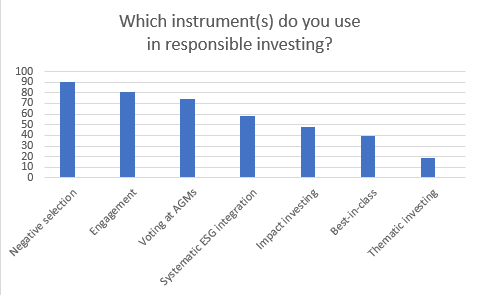
Responsible investing is a rising trend in the Dutch pension sector, with 87% of the surveyed funds now having their own sustainable investment policy. The remaining 13% have outsourced this to their fiduciary manager.
None of the surveyed funds said they have no dedicated policy for responsible investing.
À la prochaine…